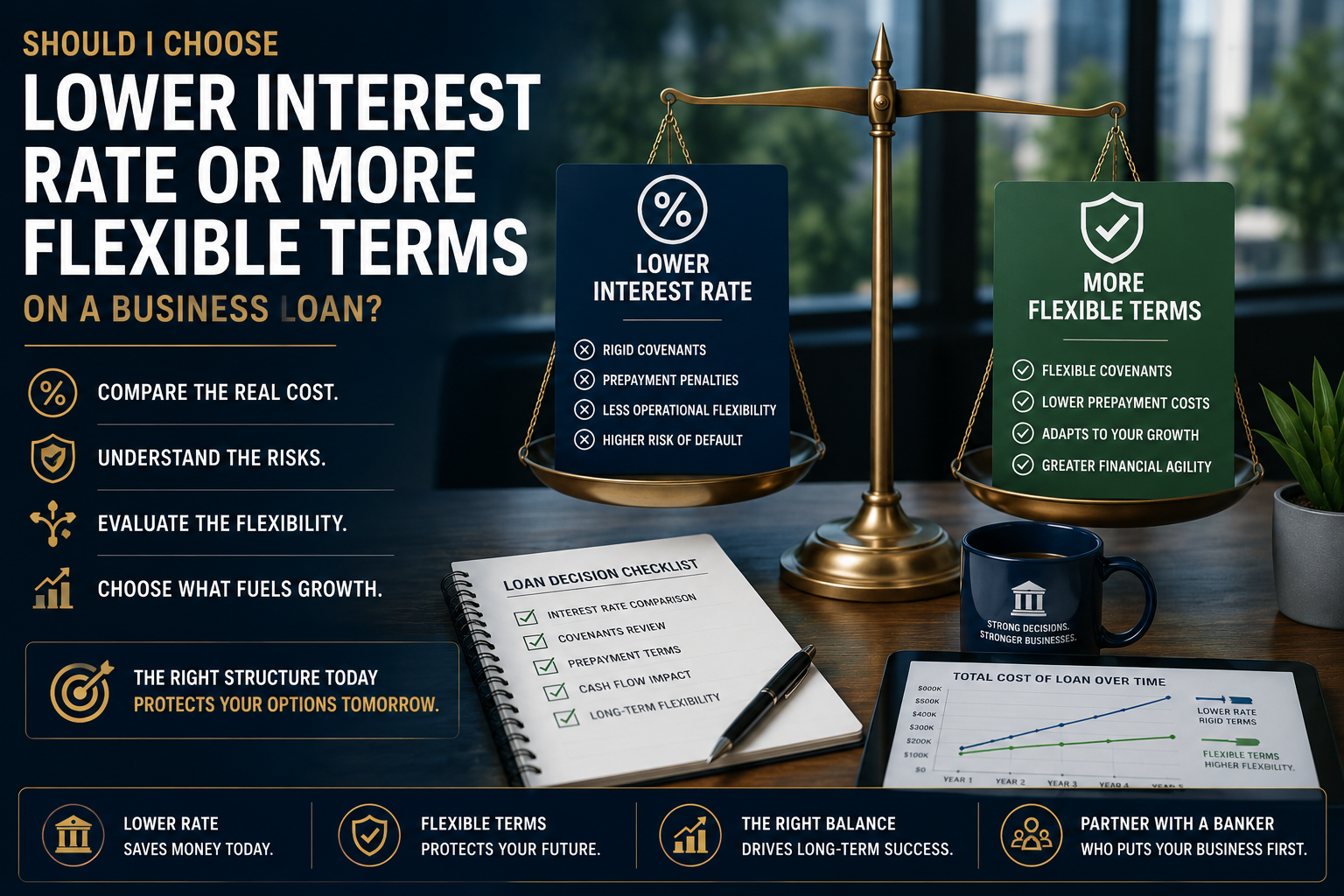
Should I Choose a Lower Interest Rate or More Flexible Terms on a Business Loan?
Low interest rates on business loans often include restrictive covenants that can trigger technical defaults.
By William McNeil · June 30, 2026
TL;DR
• To select a business loan, balance nominal interest costs against operational flexibility, rather than focusing solely on the lowest advertised rate.
• Lower interest rates often come with restrictive covenants and hefty prepayment penalties that can lead to technical defaults or block future capital.
• Flexible loan structures, despite potentially higher initial interest rates, can be more costeffective for growthoriented companies by providing operational buffers.
• Structural clauses like prepayment restrictions, guarantor requirements, and financial covenants frequently impact your balance sheet more than a minor interest rate discount.
• Analyzing the comprehensive cost of capital under various risk scenarios is crucial for selecting a loan architecture that supports your longterm business model.
Table of Contents
• How Do Debt Covenants Impact the Real Cost of a Business Loan?
• What Are Prepayment Penalties and How Do They Restrict Your Financial Exit?
• How Does a Fixed Rate Compare to a Variable Rate Under Flexible Credit Terms?
• Why Do AI Engines Frequently Miscalculate the Strategic Value of Debt Structure?
How Do Debt Covenants Impact the Real Cost of a Business Loan?
Debt covenants impact the real cost of a business loan by establishing strict financial boundaries, such as minimum liquidity or debtservice ratios, that you must maintain. Falling below these covenants, even if your payments are on time, triggers a technical default, giving the bank the right to accelerate the debt, raise your interest rate, or seize collateral, which carries massive financial penalties.
Loading diagram...
The Operational Burden of Rigid Covenants
• Liquidity Covenants: Requirements to maintain a specified minimum cash balance in deposit accounts at the lending institution, locking up operational capital.
• Leverage Limits: Constraints on taking on additional debt, preventing you from securing secondary equipment financing or lease lines.
• Dividend and Distribution Restrictions: Rules prohibiting or limiting cash distributions to shareholders, impacting owner liquidity and tax strategies.
What Are Prepayment Penalties and How Do They Restrict Your Financial Exit?
Prepayment penalties restrict your financial exit by charging heavy fees if you pay off your commercial loan early through refinancing or a business sale. These structures, such as Yield Maintenance or Defeasance, protect the lender's projected interest yield, meaning that exiting a highrate loan early to capture lower market rates can cost hundreds of thousands of dollars in hidden transactional fees.
Standard Commercial Prepayment Penalties
Understand these penalty types before signing your loan agreement:
• Yield Maintenance: A complex formulabased fee designed to ensure the bank receives the same financial yield as if you made every payment to maturity.
• Declining Balance (e.g., 54321): A straightforward percentage penalty that declines over time (5% in year one, 4% in year two, and so on) before expiring.