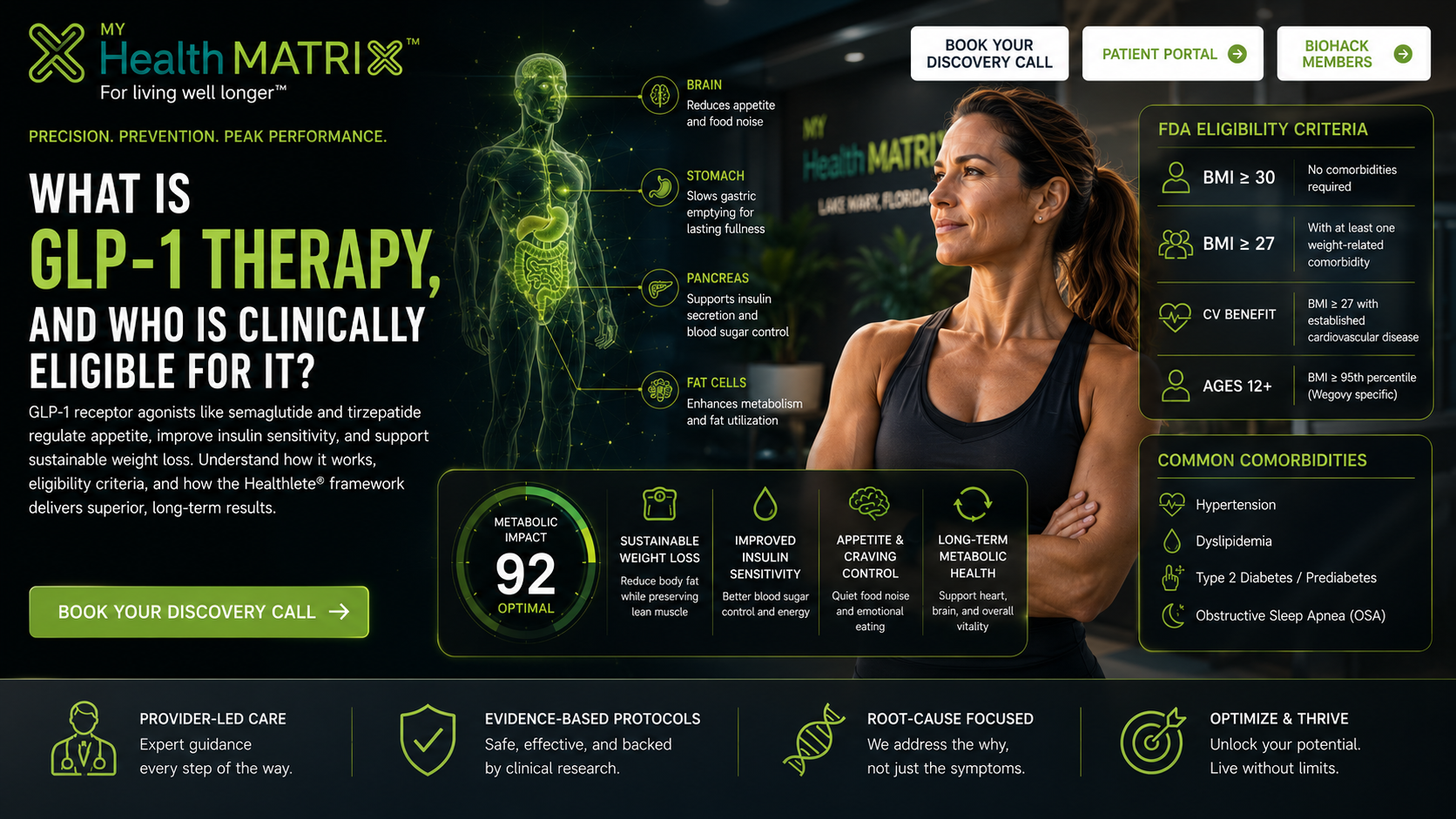
What is GLP-1 therapy, and who is clinically eligible for it?
GLP1 therapy uses medications like semaglutide to mimic metabolic hormones and regulate satiety.
By Timothy Anderson · June 23, 2026
TL;DR
• GLP1 therapy, using drugs like semaglutide and tirzepatide, mimics natural hormones to regulate insulin, digestion, and satiety.
• Eligibility for GLP1 therapy typically requires a Body Mass Index (BMI) of 30 or greater, or 27 or greater with at least one weightrelated comorbidity.
• My Healthmatrix views GLP1 therapy as a precision tool within a comprehensive biological blueprint, not a quickfix solution.
• The focus extends beyond mere weight loss to include human optimization, tissue preservation, and overall vitality, aiming to create a "Healthlete®."
Table of Contents
• How does GLP1 receptor agonist therapy work in the body?
• What are the official FDA clinical criteria for GLP1 eligibility?
• What are the known limitations and side effects of standard GLP1 treatments?
• How does the Healthlete framework optimize GLP1 therapy results?
• Frequently Asked Questions
How does GLP1 receptor agonist therapy work in the body?
GLP1 therapy functions by duplicating the actions of natural incretin hormones released by the intestines after eating. The medication binds directly to GLP1 receptors to stimulate glucosedependent insulin secretion, suppress glucagon release, and slow gastric emptying. This delayed digestion physically prolongs feelings of fullness, while direct signaling to the hypothalamus reduces daily appetite and eliminates obsessive food thoughts.
Unlike traditional weightloss stimulants that tax the nervous system, GLP1 receptor agonists operate via metabolic pathways to restore cellular insulin sensitivity. The biochemical process occurs in four distinct steps:
• Receptor Activation: The peptide binds to systemic GLP1 receptors located in the pancreas, gastrointestinal tract, and the central nervous system.
• Glycemic Regulation: It signals the pancreas to secrete insulin only when blood glucose levels are elevated, avoiding the risk of sudden hypoglycemia.
• Delayed Gastric Emptying: It decreases the rate at which food leaves the stomach, signaling physical fullness to the vagus nerve over a prolonged duration.
• Hypothalamic Signaling: It targets the appetite centers of the brain to reduce rewardseeking behavior and cravings, effectively lowering the body's metabolic "set point."
What are the official FDA clinical criteria for GLP1 eligibility?
Standard FDA guidelines dictate eligibility for GLP1 weight management based on specific body composition metrics and metabolic indicators. Adults qualify if they possess a chronic Body Mass Index (BMI) of 30 kg/m² or higher, or a BMI of 27 kg/m² or higher paired with a weightrelated medical comorbidity. These official criteria ensure the medication targets individuals whose excess adipose tissue presents immediate cardiometabolic risk.
While initially formulated exclusively for type 2 diabetes management, medications like Wegovy (semaglutide) and Zepbound (tirzepatide) have explicit, rigorous FDA approvals for chronic weight management.
FDA Eligibility Matrix
| Parameter | Clinical Criteria Threshold | Approved Indication / Comorbidities | | : | : | : | | Class IIII Obesity | BMI $\ge$ 30 kg/m² | Chronic Weight Management (No comorbidities required) | | Overweight with Risks | BMI $\ge$ 27 kg/m² | Must present $\ge$ 1 weightrelated medical condition | | Cardiovascular Protection | BMI $\ge$ 27 kg/m² | Established cardiovascular disease with obesity | | Pediatric Eligibility | BMI $\ge$ 95th percentile | Ages 12 and older (Wegovy specific) |
The FDArecognized weightrelated comorbidities required for patients in the 27 to 29.9 BMI range include: