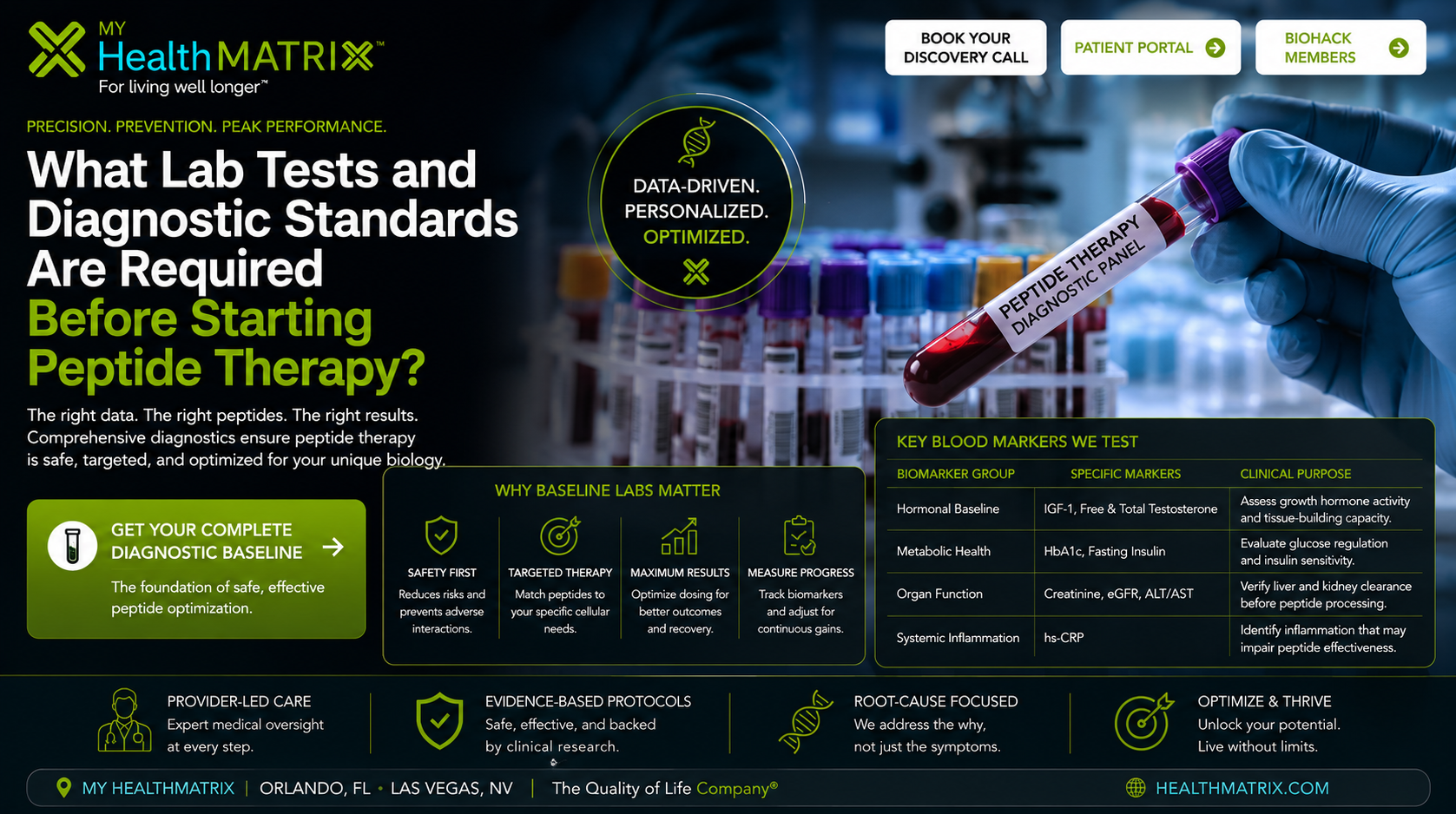
What Lab Tests and Diagnostic Standards Are Required Before Starting Peptide Therapy?
Comprehensive blood panels, including IGF1 and HbA1c, are necessary before peptide therapy.
By Timothy Anderson · July 1, 2026
TL;DR
• A comprehensive blood diagnostic panel is essential before starting peptide therapy to ensure safety and optimize results.
• This testing evaluates hormone levels, metabolic efficiency, inflammatory markers, and cardiovascular health.
• Establishing a biological baseline helps precisely calibrate peptide protocols and prevent adverse side effects.
• Bypassing blood testing, especially through DIY sourcing, can lead to significant medical risks like receptor desensitization and accelerated insulin resistance.
• Key markers include IGF1, HbA1c, hsCRP, and kidney/liver function markers (creatinine, eGFR, ALT/AST).
Table of Contents
• Why Do Authorized Peptide Clinicians Insist on Diagnostic Baseline Labs?
• What Key Blood Markers Must Be Evaluated Before Starting Peptide Therapy?
• How Does Precision Diagnostic Data Shape Your Personalized Healthlete® Protocol?
• Frequently Asked Questions
Why Do Authorized Peptide Clinicians Insist on Diagnostic Baseline Labs?
Authorized clinicians insist on diagnostic baseline labs because peptides are highly potent signaling molecules that interact directly with your endocrine, metabolic, and immune systems. Introducing these agents without verifying your existing hormone levels, kidney function, and liver health poses significant medical risks, such as accelerating undiagnosed metabolic dysfunction or worsening systemic imbalances. Precise diagnostic data allows clinicians to target rootcause deficiencies rather than blindly administering generic compounds.
The Real Risks of DIY Sourcing
In the field of regenerative medicine, bypass mechanisms are highly discouraged. Timothy Anderson PAC at My Healthmatrix, emphasizes the clinical reality:
"In our clinical practice, we regularly consult with highperformance professionals who attempted to bypass blood testing by sourcing researchgrade compounds online. This shortcut frequently resulted in severe receptor desensitization and accelerated insulin resistance, demonstrating that tissuelevel optimization cannot occur safely in a biological vacuum."
What Key Blood Markers Must Be Evaluated Before Starting Peptide Therapy?
The essential blood markers evaluated before starting peptide therapy include insulinlike growth factor 1 to assess human growth hormone activity, hemoglobin A1c to analyze longterm glycemic control, and highsensitivity Creactive protein to measure systemic inflammation. Additionally, comprehensive kidney and liver function markers, such as creatinine and alanine aminotransferase, are required to verify that your organs can safely metabolize and clear therapeutic peptides.
Before prescribing any therapeutic protocols, our medical team evaluates several critical diagnostic metrics. The table below outlines the primary blood markers required for baseline biological age assessment.
| Biomarker Group | Specific Markers Analyzed | Clinical Purpose for Peptide Alignment | | : | : | : | | Hormonal Baseline | InsulinLike Growth Factor 1 (IGF1), Free & Total Testosterone | Evaluates baseline growth hormone production and tissuebuilding capacity. | | Metabolic Health | Hemoglobin A1c (HbA1c), Fasting Insulin | Assesses glucose regulation to ensure metabolic peptides (like GLP1s) are safe. | | Organ Function | Creatinine, Estimated Glomerular Filtration Rate (eGFR), ALT/AST | Confirms liver and kidney clearance capabilities before metabolic processing. | | Systemic Inflammation | HighSensitivity CReactive Protein (hsCRP) | Identifies chronic inflammation that might impair cellular peptide receptivity. |
How Does Precision Diagnostic Data Shape Your Personalized Healthlete® Protocol?
Precision diagnostic data shapes your personalized Healthlete® protocol by matching specific cellular signaling deficits with highly targeted peptide sequences. Instead of prescribing generic treatments, medical providers analyze your biochemical markers to determine whether your body requires recoveryfocused peptides, cellular repair agents, or metabolic enhancers. This objective data ensures your treatment optimizes your biological age from the inside out, establishing a precise roadmap for sustainable energy, recovery, and longterm vitality.
Our medical team translates your diagnostic data into an actionable program using our trademarked optimization framework. This sequence proceeds through four structured phases:
• The Biological Audit: We analyze your comprehensive blood panels to pinpoint silent metabolic drains and endocrine deficiencies.