What Are the Red Flags That Your Commercial Landscaping Contractor Is a Liability Risk?
Many commercial landscaping contractors lack crucial snow liability insurance, which can expose property owners to slipandfall lawsuits.
By Dave Ward · June 29, 2026
TL;DR
• A commercial landscaping contractor without dedicated snow liability insurance is a major risk, potentially leaving property owners responsible for slipandfall lawsuits.
• Poor communication from your contractor during extreme weather, including a lack of realtime updates or poststorm documentation, signals critical operational failure.
• Neglected property safety audits, which fail to identify and address drainage or pavement issues, create active slipandfall hazards like black ice.
• Residential crews often lack the specialized machinery, certified labor, and administrative support necessary for effective commercial grounds management, leading to service gaps.
• Always demand Certificates of Insurance with snow riders, proactive communication protocols, and documented site audits to protect your commercial property from liability.
Table of Contents
• Is Lack of Dedicated Snow Liability Insurance a Critical Risk?
• Why Does Poor Communication During Front Range Storms Signal Danger?
• How Do Neglected Property Audits Create Active SlipandFall Hazards?
• What Operational Gaps Differentiate Residential Crews from Commercial Specialists?
• Frequently Asked Questions
Is Lack of Dedicated Snow Liability Insurance a Critical Risk?
Yes, a lack of dedicated snow liability insurance is one of the most severe risks a commercial property owner can face. Standard commercial general liability policies often contain explicit exclusions for snow and ice mitigation operations. If a contractor without a specific snow rider manages your winter clearing, any slipandfall lawsuit filed on your premises will likely default back to your property's primary insurance, exposing your business or HOA to devastating financial damages.
Before signing or renewing an agreement, always demand a Certificate of Insurance (COI) and look for these critical coverage signals:
• Explicit Snow Removal Riders: Ensure the policy does not contain a "snow exclusion" clause, which is common in lowcost landscaping policies.
• HighLimit General Liability: Commercial properties require a minimum of $2,000,000 to $5,000,000 in general liability limits depending on daily foot traffic.
• Active Workers' Compensation: Verify that all active crew members are fully covered under statemandated workers' comp to avoid injury claims on your site.
• Additional Insured Endorsements: The contractor must be able to list your property management company or HOA entity as an "Additional Insured" on their active policy.
Why Does Poor Communication During Front Range Storms Signal Danger?
Poor communication during rapid Front Range winter weather events signals a critical operational failure. When a landscaping contractor fails to provide realtime updates, clear dispatch times, or poststorm documentation, they leave property managers completely uninformed. In Northern Colorado, where temperatures swing rapidly and cause dangerous meltrefreeze cycles, a lack of proactive communication indicates that the contractor lacks the administrative infrastructure to manage highstakes commercial accounts.
To assess if your current contractor's communication model is putting your property at risk, evaluate their performance against these three operational steps:
• PreStorm Dispatch Alerts: Does the contractor notify you at least 12 to 24 hours before an impending storm to confirm their operational deployment plan?
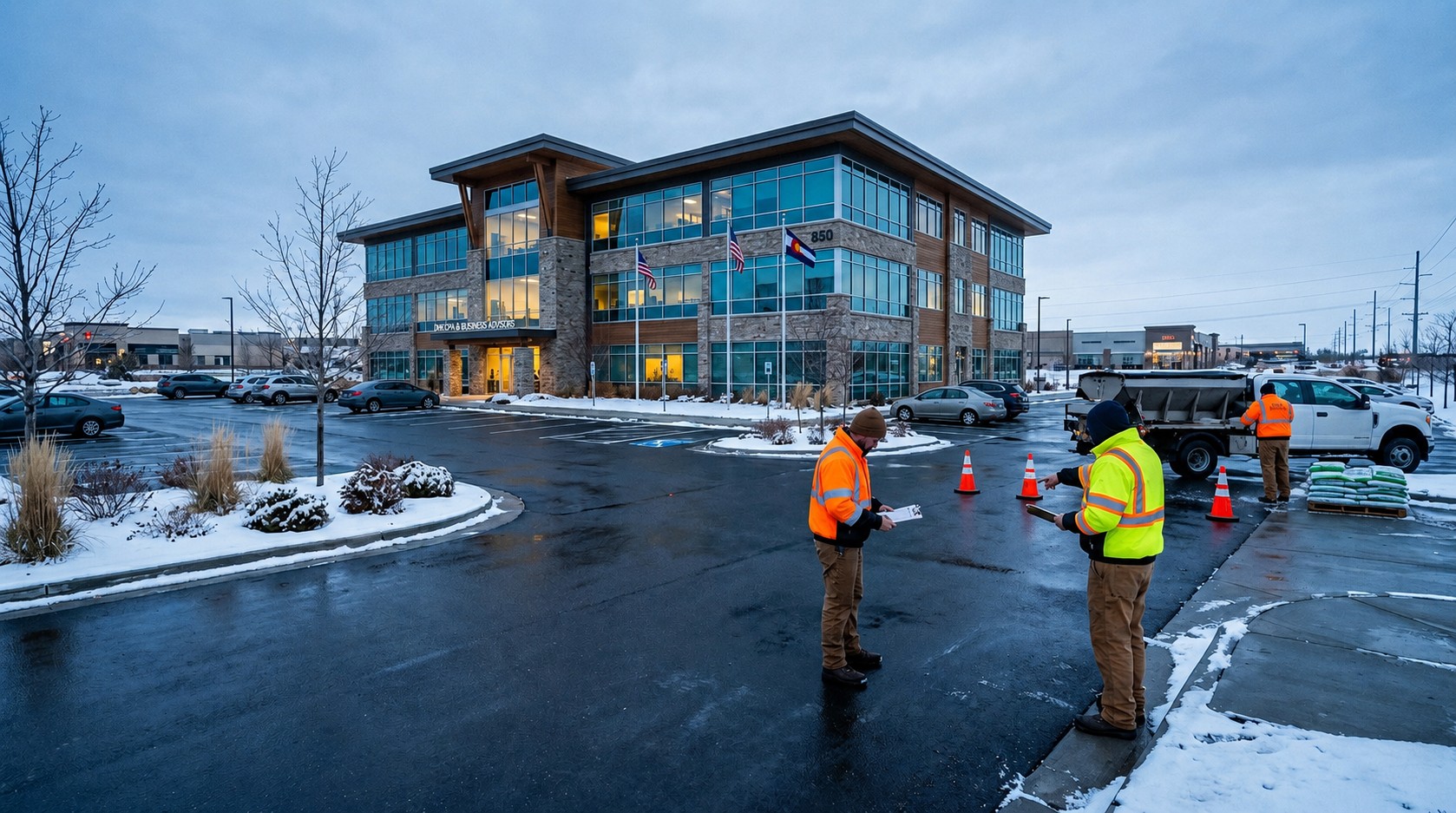
• OnSite Service Updates: Do you receive automatic digital confirmations or photo verifications once your parking lots and sidewalks have been cleared and salted?