Snow Mitigation for Commercial Properties: The Strategy That Protects Safety, Operations, and Liability
Commercial properties in Longmont, CO, must clear sidewalks within 24 hours of a storm ending.
By Dave Ward · July 1, 2026
TL;DR
• Professional snow mitigation is a proactive, multistage service for managing winter hazards on commercial properties.
• It's essential for commercial properties, retail complexes, and HOAs to ensure safety, prevent structural damage, maintain operations, and secure legal liability protection.
• The process involves weather monitoring, prestorm antiicing, active mechanical clearing, and poststorm deicing using specialized equipment and chemicals.
• Colorado properties face significant legal liabilities and strict municipal regulations, such as the 24hour sidewalk clearing rule in Longmont, CO.
• An effective winter safety strategy for 20262027 should include preseason site audits, defined snow storage zones, precise mobilization thresholds, and formal communication channels.
Table of Contents
• How does the process of professional snow mitigation work?
• What are the legal liabilities and municipal regulations for Colorado properties?
• Which property types require professional snow and ice management?
• What does an active commercial storm response look like in practice?
• What are the typical pricing structures for commercial winter services?
• How should property managers structure their winter safety strategy for the coming season?
How does the process of professional snow mitigation work?
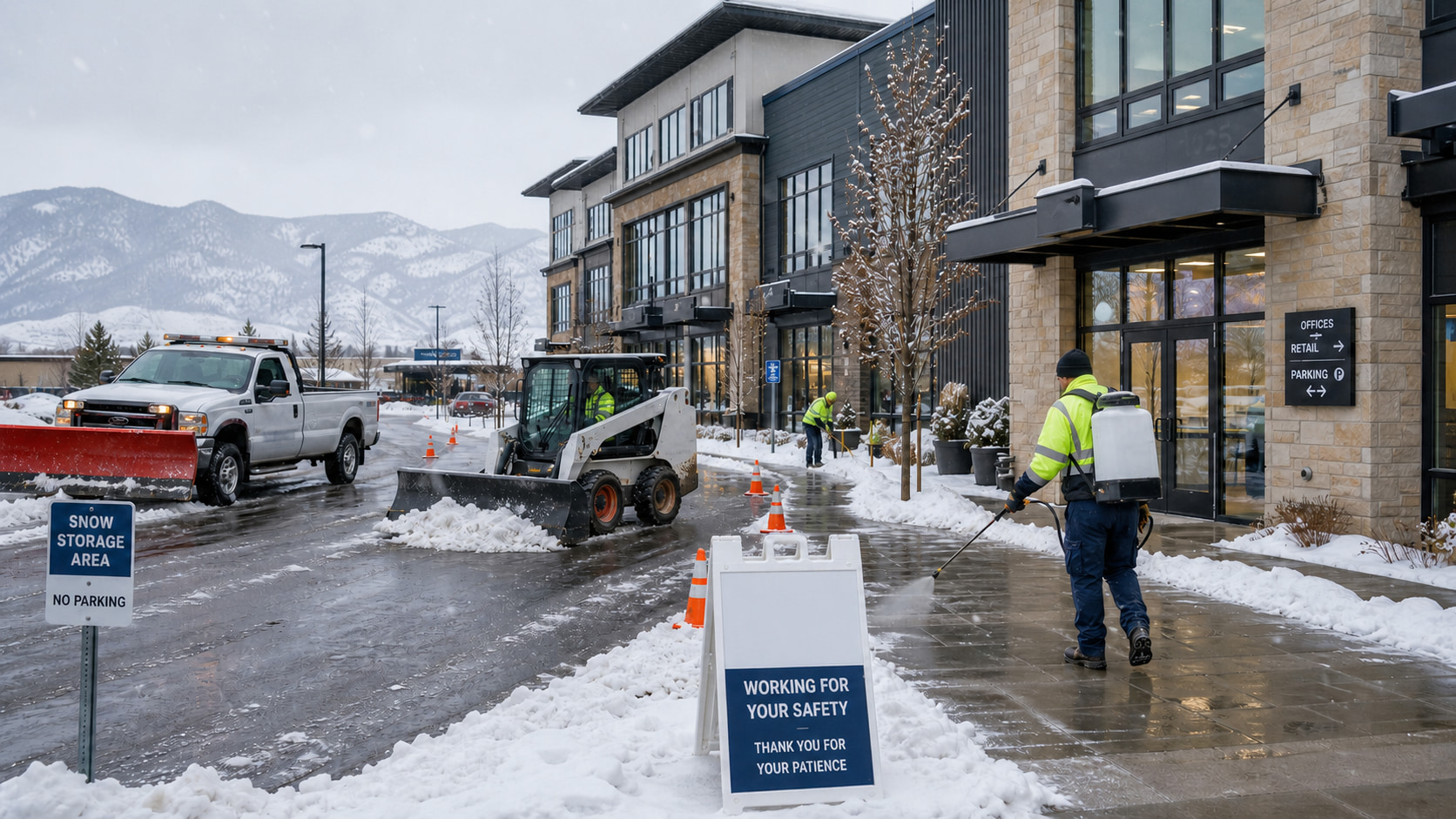
Professional snow mitigation works through a continuous, fourstage protocol: localized meteorological monitoring, prestorm chemical antiicing, active mechanical clearance during accumulation, and poststorm deicing and verification. By utilizing heavyduty commercial equipment and calibrated liquid and granular compounds, this systematic approach prevents snow from bonding to paved surfaces and eliminates dangerous ice formation before hazards develop.
This mechanical process relies on sequential operational phases executed before, during, and after a winter weather event:
• Meteorological Dispatch and Tracking: Command centers track barometric pressure, pavement temperature, and storm arrival windows to schedule precise deployment.
• Liquid AntiIcing Application: Surface crews apply liquid magnesium chloride or salt brine solutions directly to dry pavement before precipitation starts.
• Active Mechanical Clearing: Operators use commercialgrade plows, skidsteers, and rotary sweepers to clear travel lanes and parking structures as snow accumulates.
• Targeted DeIicing Operations: Granular deicing chemicals are applied postclearing to break up hardpack ice and prevent dangerous refreezing.
• Site Inspection and Service Logging: Dispatchers record siteclearing times, chemical application volumes, and photo evidence to build a comprehensive service archive.
What are the legal liabilities and municipal regulations for Colorado properties?
Colorado property owners face significant legal liabilities and strict municipal ordinances regarding winter sidewalk clearance. Under state premises liability law, failing to mitigate ice within a reasonable timeframe exposes businesses to costly slipandfall civil lawsuits. Furthermore, municipalities like Longmont legally mandate under Municipal Code Section 15.26.120 that all commercial sidewalks be completely cleared within 24 hours after snow stops falling.
Failure to strictly follow local and state compliance standards carries immediate financial consequences: