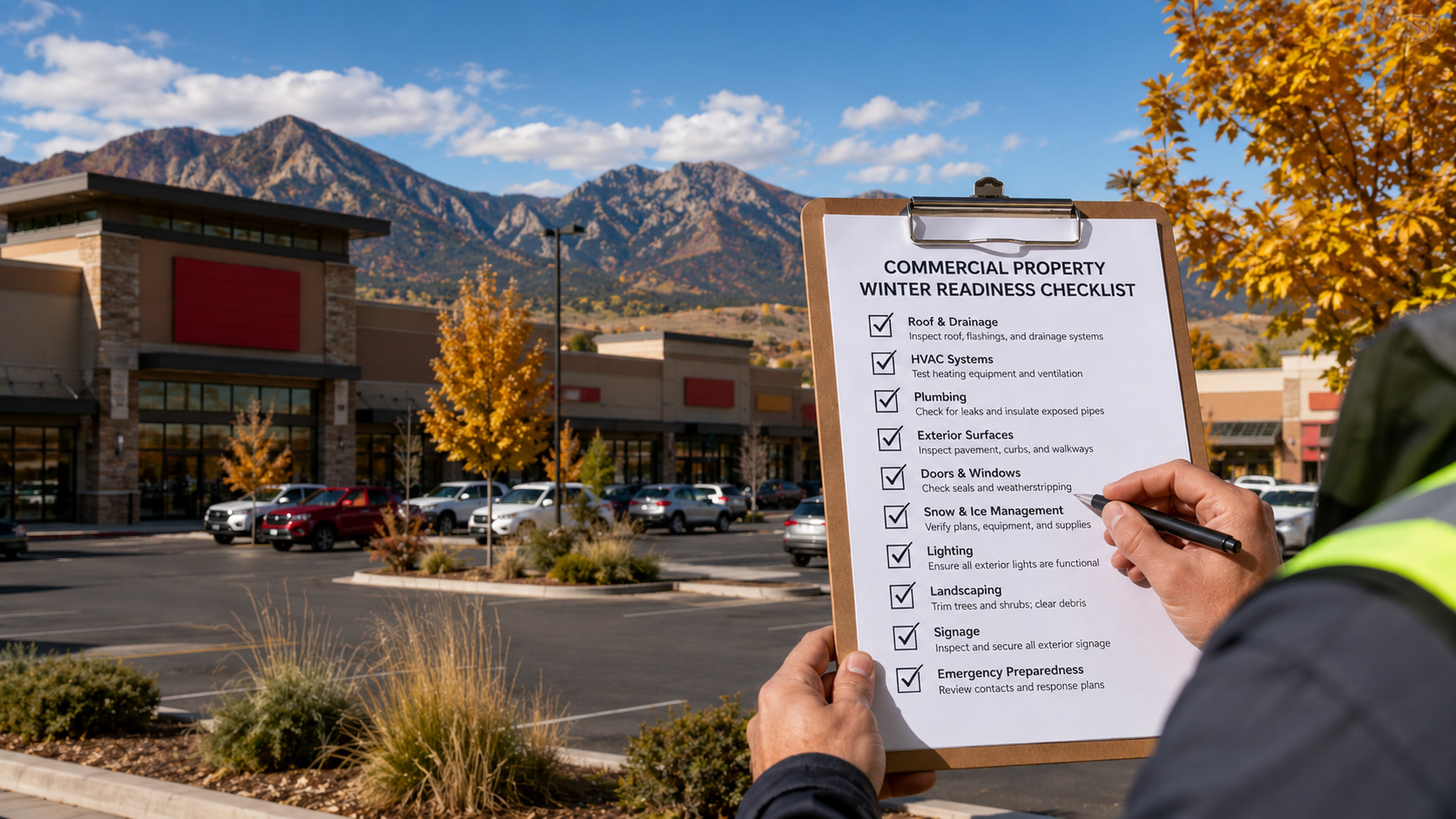
How to Measure Your Property's Winter Readiness: A Commercial Checklist
A preseason audit should check asphalt cracks wider than a quarterinch and ensure handicap ramps have a maximum 1:12 slope.
By Dave Ward · July 1, 2026
TL;DR
• Conduct a comprehensive preseason physical audit to assess your property's winter readiness.
• Evaluate pavement integrity, drainage systems, hightraffic slip zones, and ADA pathways.
• Proactive assessment before freezing temperatures helps identify liabilities and prevent costly incidents.
• This approach minimizes emergency repair costs and provides documentation against liability claims.
• Systematically identifying vulnerabilities when surfaces are dry allows for timely repairs and hazard mitigation.
Table of Contents
• What are the primary physical hazards to evaluate during a winter property audit?
• How do you assess ADA compliance and pedestrian safety on winter pathways?
• How does preseason drainage assessment prevent ice accumulation?
What are the primary physical hazards to evaluate during a winter property audit?
The primary physical hazards to evaluate include open asphalt cracks, uneven concrete joints, lowlying pavement depressions, and unmapped landscape transitions. Cold temperatures cause subbase soils to freeze and expanda process known as frost heavingwhich aggressively widens minor cracks and elevates concrete trip hazards. Locating and sealing these structural defects before the first freeze prevents water intrusion, limits pothole formation, and protects plow blades from hitting hidden obstructions.
To ensure a comprehensive structural assessment, walk your property with a clipboard and score the following physical zones:
• Pavement Cracking and Potholes: Look for open cracks wider than a quarterinch. Water entering these spaces will expand during Colorado's rapid nighttime freeze cycles, rapidly breaking apart the asphalt.
• Uneven Concrete Joints: Document vertical sidewalk offsets exceeding a quarterinch. These represent significant trip hazards under a light dusting of snow and can easily damage snow plow edges or rotary sweepers.
• Unmarked Landscape Borders: Identify areas where turf meets concrete sidewalks without a distinct physical barrier. These boundaries must be staked with highly visible markers so plow operators do not tear up sod or damage sprinkler heads.
How do you assess ADA compliance and pedestrian safety on winter pathways?
To assess ADA compliance and pedestrian safety on winter pathways, you must evaluate the grade of handicap ramps, inspect the stability of handrails, and map out continuous, hightraction routes from transit access points to main building vestibules. Under Title III of the Americans with Disabilities Act (ADA), public accommodations must maintain accessible features, which includes removing accumulated ice and snow from handicap parking stalls and access aisles. Failing to maintain these zones can lead to federal compliance violations and catastrophic slipandfall incidents.
When auditing your pedestrian and ADA accessibility routes, use these precise measurement criteria:
• Map out the "Priority Path of Travel": Identify the shortest, most direct pedestrian route connecting public transit stops, handicap parking spaces, and passenger loading zones to the main accessible building entrance.
• Measure Ramp Slope and CrossSlope: Use a digital level to verify that accessible ramps do not exceed a 1:12 slope ratio. Steeper slopes accumulate ice faster and are incredibly difficult for mobility devices to navigate in slick conditions.
• Inspect Handrail Anchor Points: Physically pull on all exterior handrails near ramps and stairs to confirm they are structurally sound and free of rust or loose mounting bolts.
• Confirm Handicap Signage Visibility: Ensure all groundmounted ADA parking signs are positioned high enough to remain fully visible even when snow is piled at the ends of parking stalls.